
Why Should You Use Coffee Filters on Your TV Screen? The Hack That’s Mostly Right—If You Do It This Way

You know that split-second panic when you notice a greasy fingerprint right in the middle of the scene—and your hand reaches for the nearest thing on the coffee table? If that “nearest thing” is a paper towel (or, worse, glass cleaner), stop. Modern TVs—especially newer anti-glare and OLED/LCD panels—can be surprisingly easy to mess up with the wrong wipe.

So…coffee filters. Genius hack or internet nonsense?
Why The Coffee-Filter Trick Keeps Coming Back
Coffee filters are thin, smooth, and designed to be low-lint. That’s the whole appeal: compared to tissues or paper towels, they’re less likely to leave fuzz behind (or drag little bits across the screen). Some cleaning guides even list them as an optional tool for screen cleaning.
Man Made DIY has even highlighted the idea specifically for TVs and monitors—because, in a pinch, most kitchens have filters even if you can’t find a microfiber cloth.
The Real Answer: “Yes… But Only For This Job.”
Use a coffee filter for:
- Dry dusting (the haze you only notice when the TV is off)
- A light buff after you’ve safely removed a smudge with the right cloth
Don’t use a coffee filter for:
- Scrubbing fingerprints with pressure
- Anything wet (filters can break down, and you’ll be tempted to rub harder)
- Sandy/gritty dust situations (that’s how micro-scratches happen—no matter what you use)
Also: filters aren’t all identical. If yours feel textured, extra stiff, or “grippy,” skip them and get a microfiber.
The Bigger Danger Isn’t The Filter—It’s What People Pair With It

Most screen damage stories start with a spray bottle, not the cloth. Manufacturers commonly warn against harsh cleaners and solvents (think ammonia, alcohol, and other typical glass-cleaner ingredients) because they can damage coatings.
And spraying liquid directly onto the screen is a classic mistake—many guides recommend applying moisture to the cloth instead.
The 60-Second Clean That Won’t Wreck Your Screen

Do this instead (it’s boring, but it works):
- Turn the TV off and unplug it. (Also lets you see smudges better.)
- Dry dust first with a clean microfiber cloth. No pressure—just glide.
- For fingerprints: slightly dampen a microfiber cloth with plain water (distilled if you have it). Wipe gently.
- Immediately dry/buff with a second clean microfiber cloth.
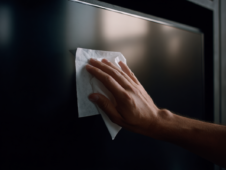
- Coffee filter bonus move: use a dry coffee filter for a final quick polish if you’re chasing streaks.
So… To Coffee Filter Or Not?
If you’re using a coffee filter as a dry, gentle duster (or a last-step polisher), it’s a solid little hack.
If you’re using it as a fingerprint eraser—especially with cleaner—skip it. Your safest “daily driver” is still a clean microfiber cloth plus a tiny bit of water, exactly as major TV makers recommend.
Next, learn how to increase the lifespan of your TV with 7 simple steps.
 Maria
Maria