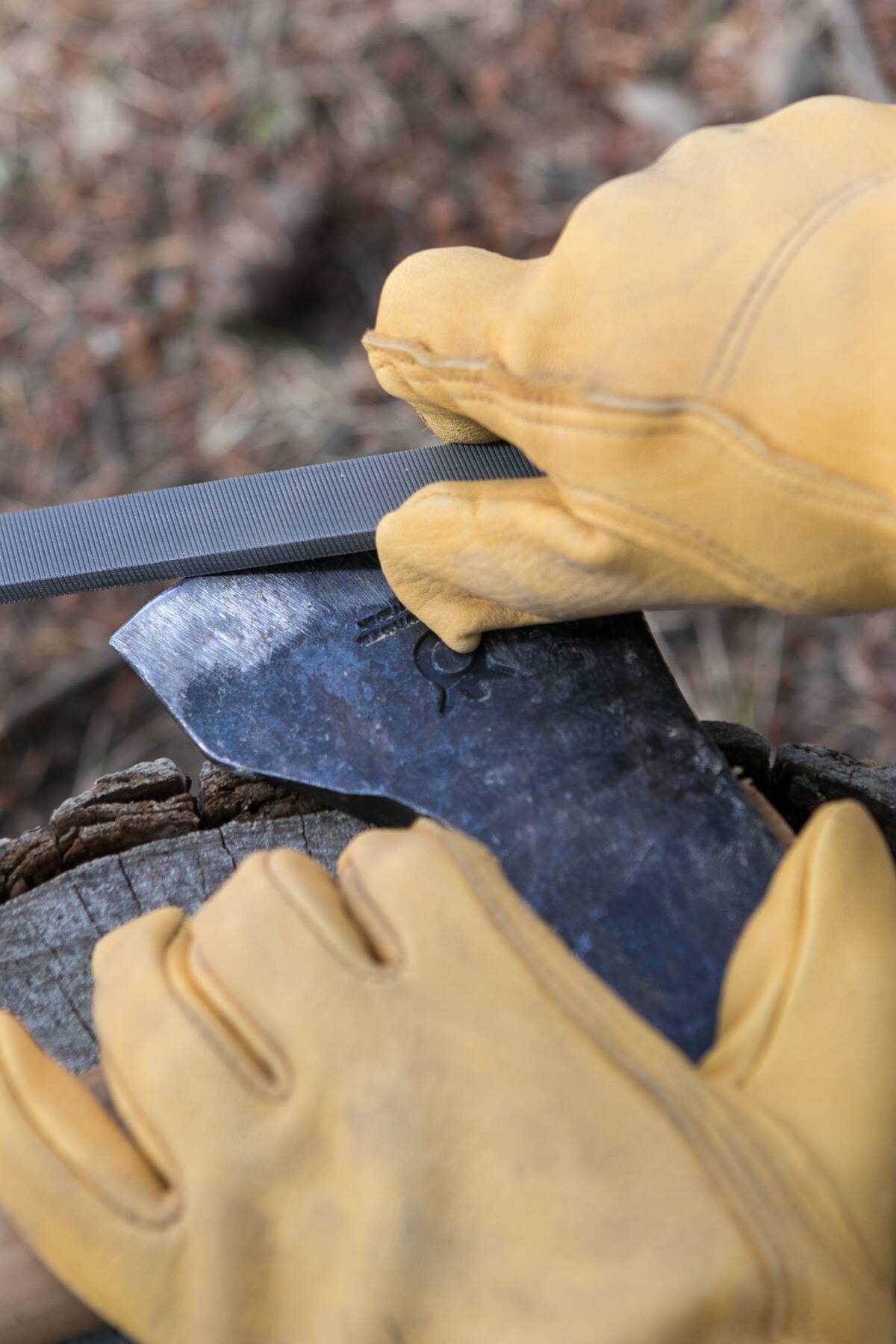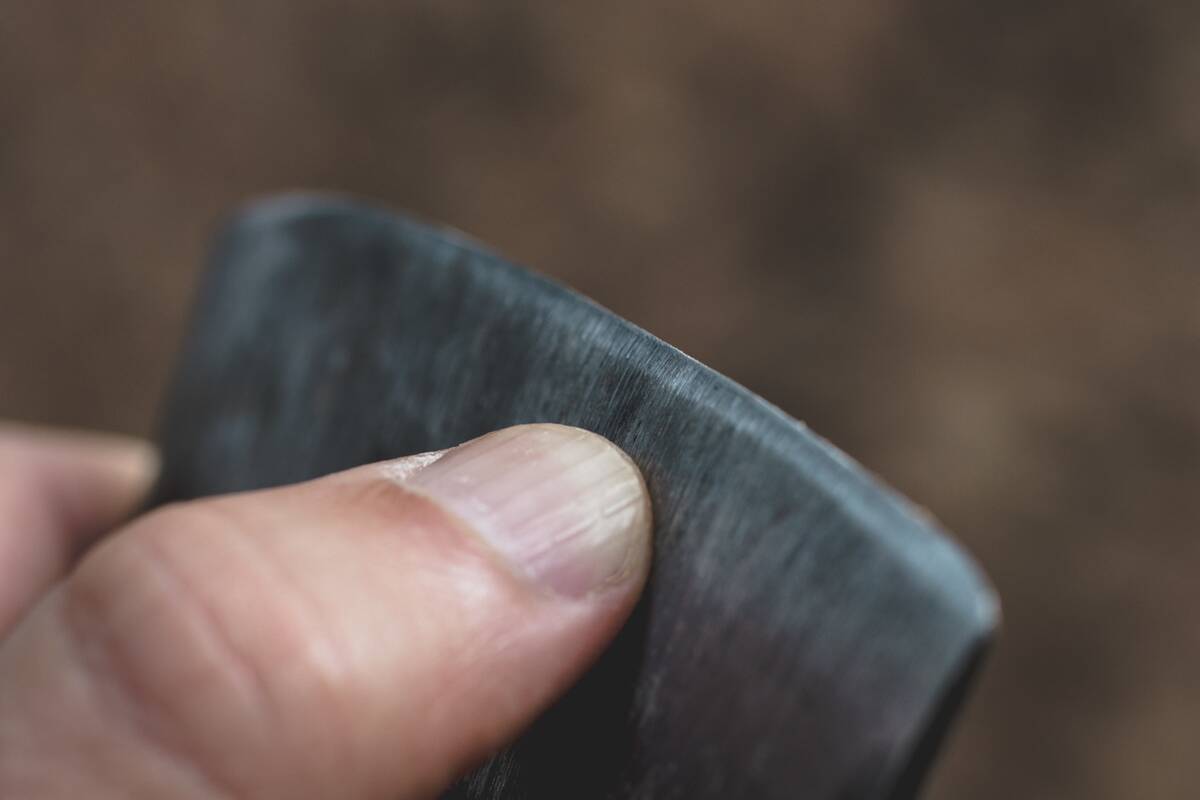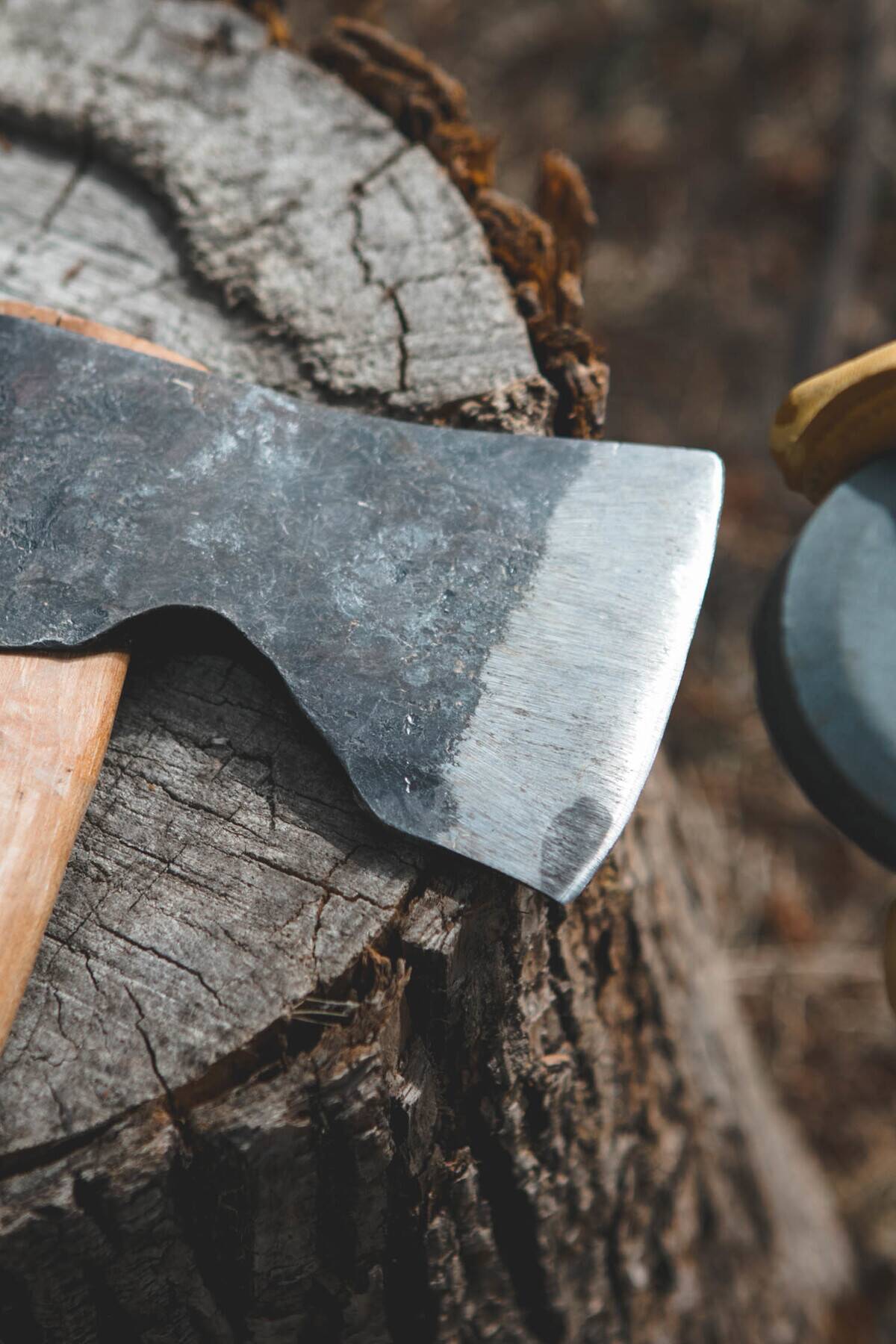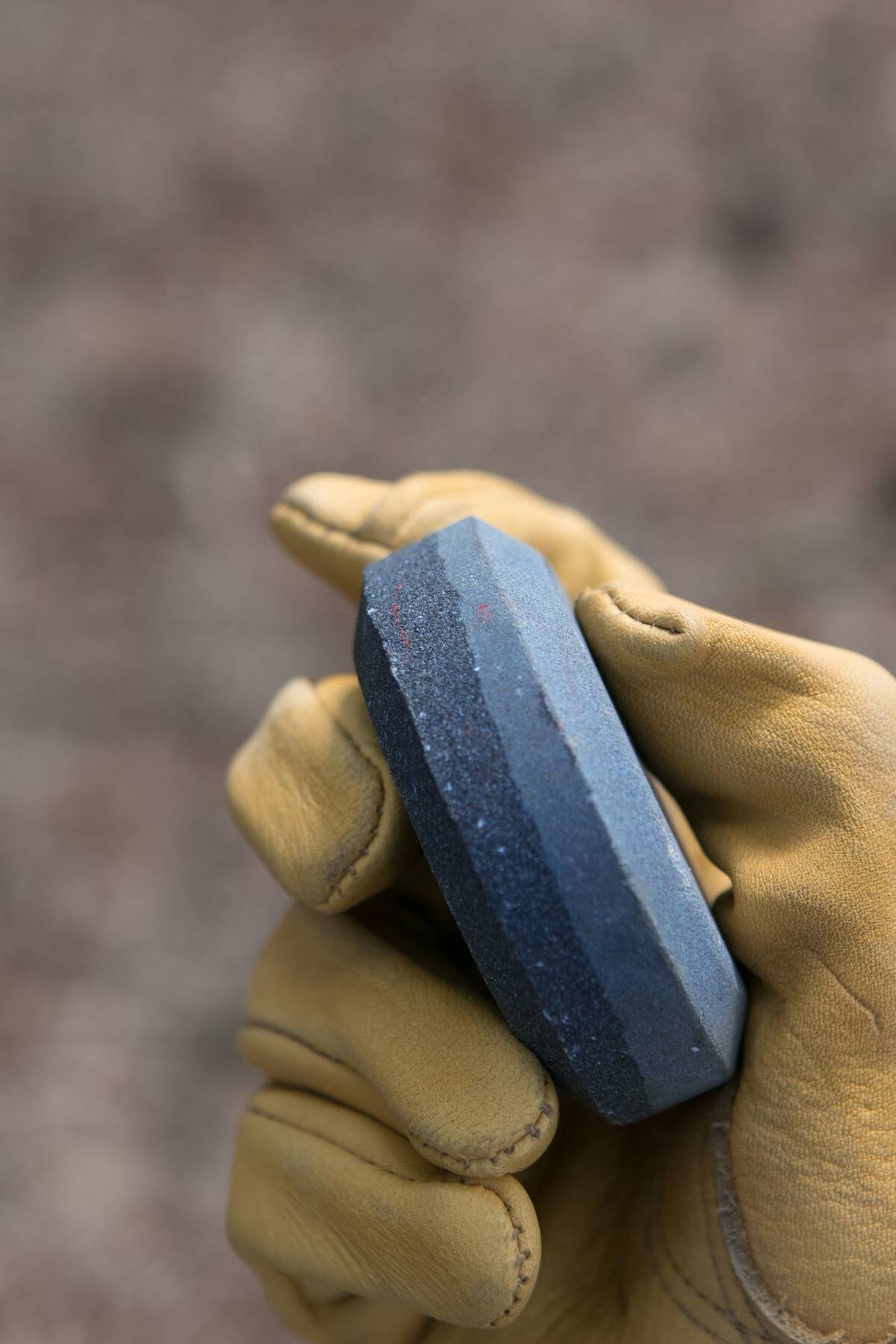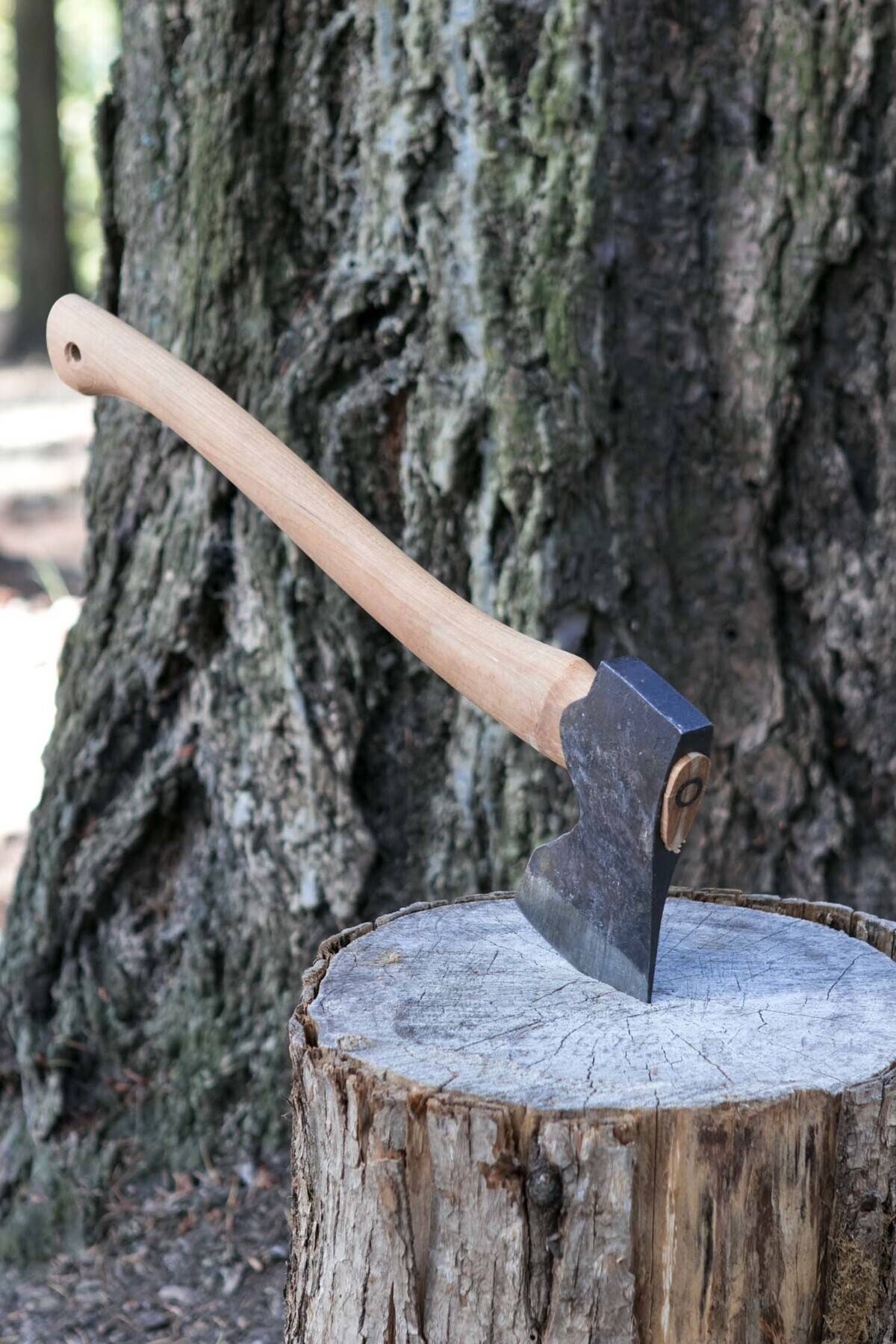
There are several types of axes, all of which can be sharpened the same way. The one exception is the broad axe, which has a single bevel on one side, and a flat opposite side, like a chisel. The broad axe is used to shape tree trunks into square-sided lumber or beams, so it needs the flat side to create the remaining edge. But if you own a broad axe, which is not suitable for chopping wood for fires, you likely already know this.
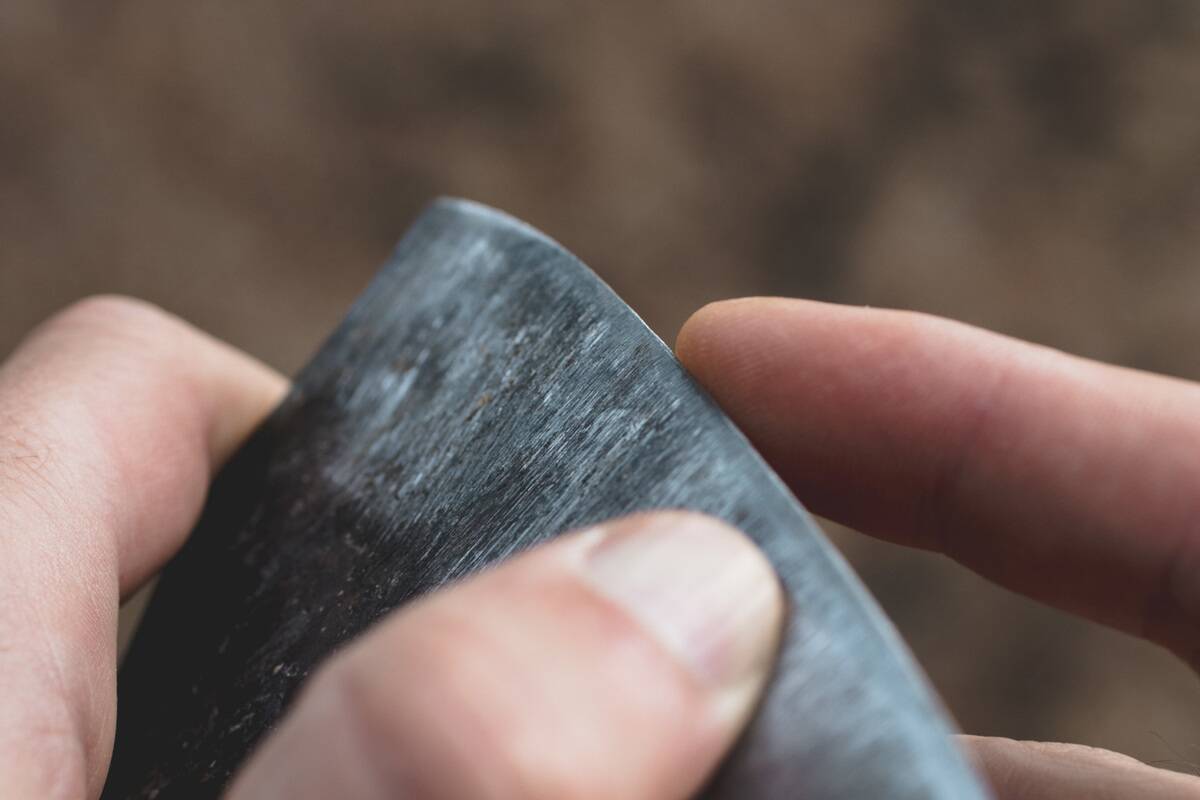
The other types of axes are all cared for in the same way: felling axes, splitting mauls, hatchets, froes, hand axes, and carpenter's axes all have a double-sided bevel. Depending on the use of the axe, this might be a 20° chisel-like bevel for cutting wood fibers across the grain, or a much broader 35-40° for splitting wood along the grain.
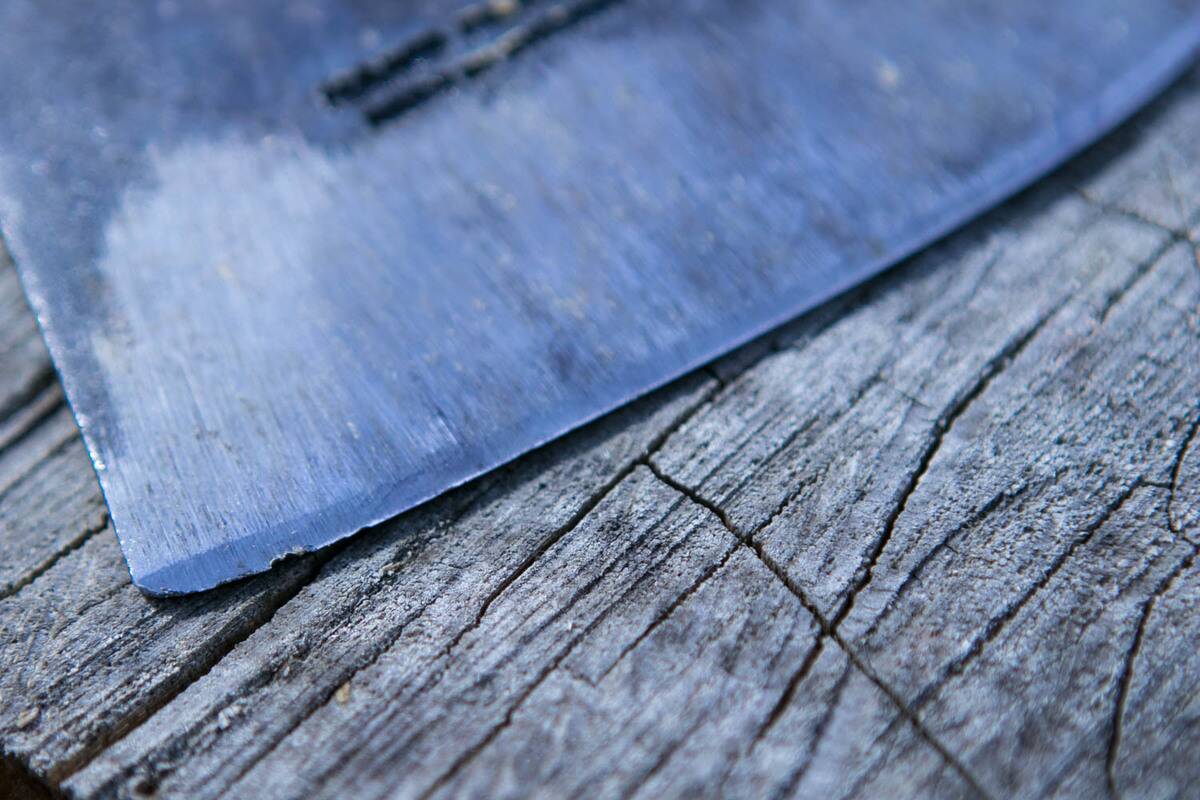
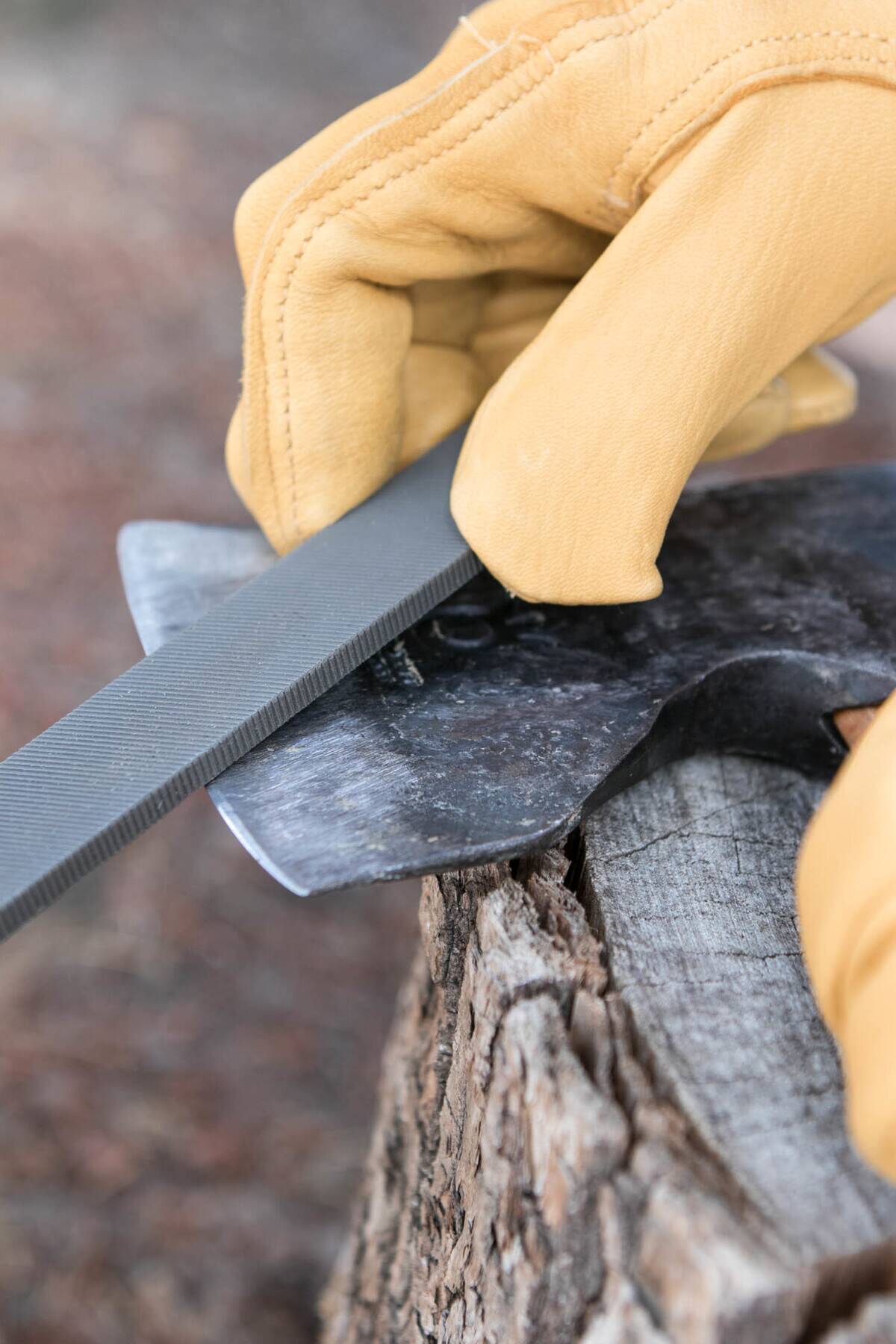
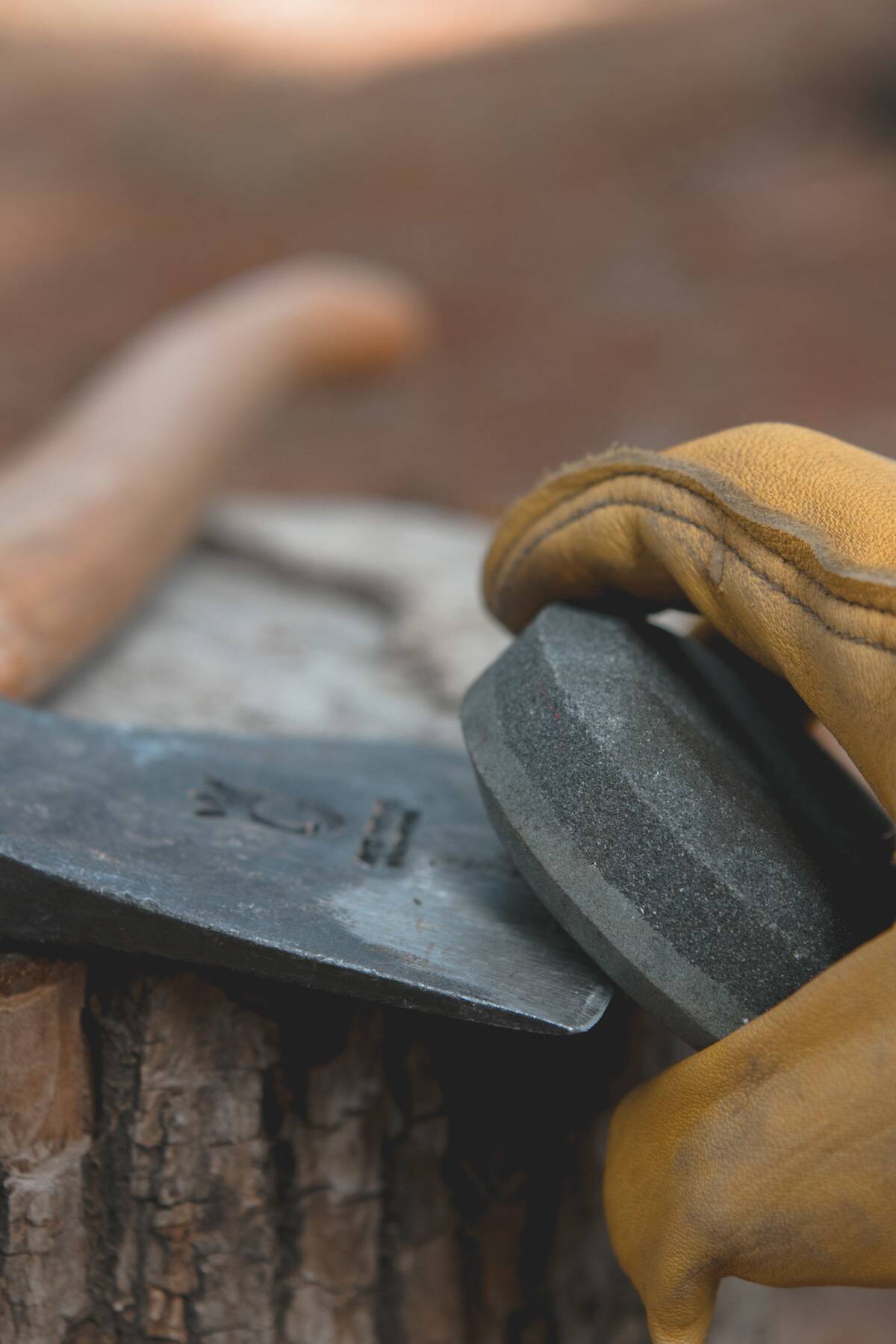
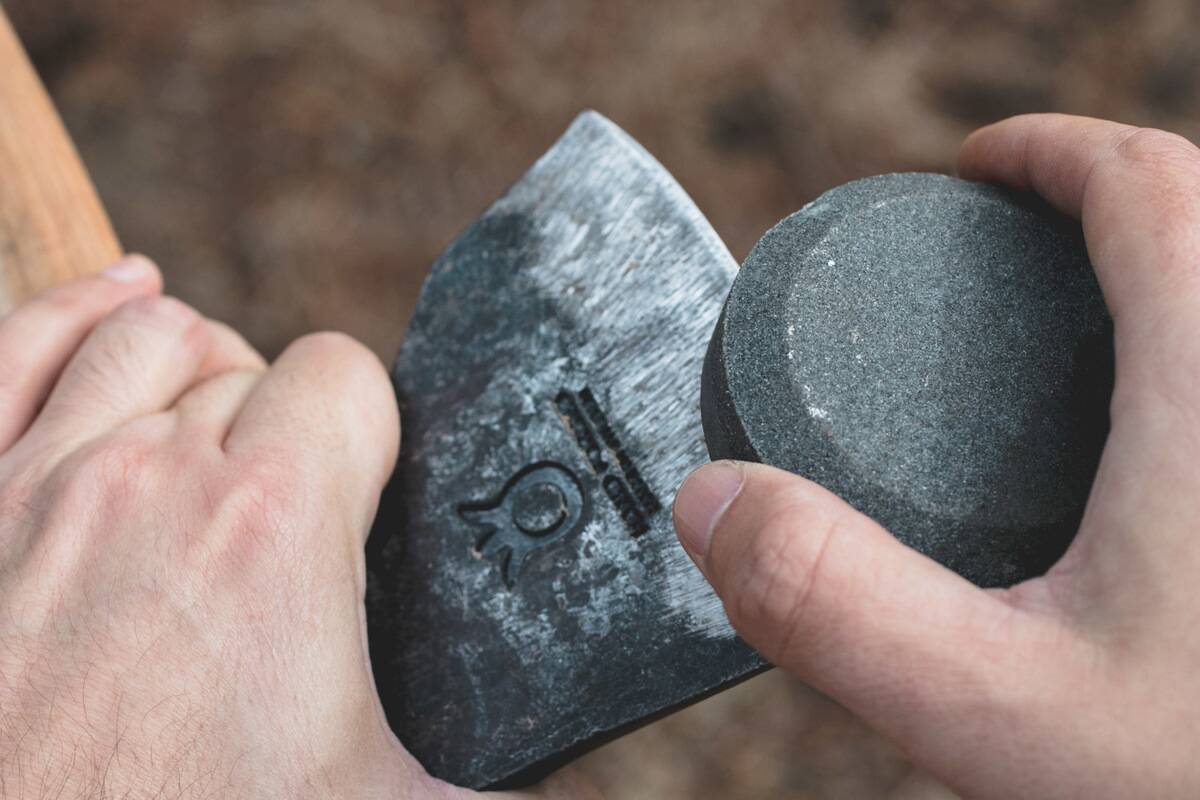
Thankfully, you won't need a protractor to figure this angle out. You can simply follow the existing bevel at which your axehead was ground at the forge to keep it just right for the intended purpose.
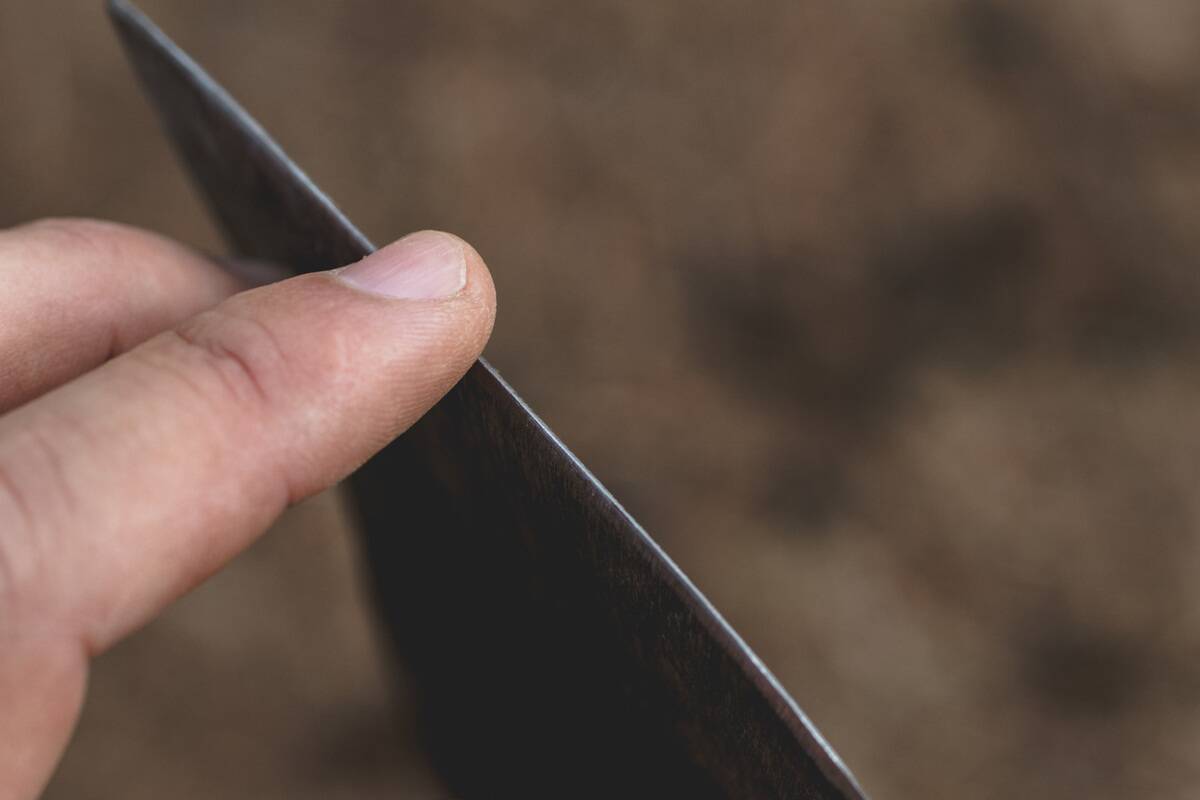
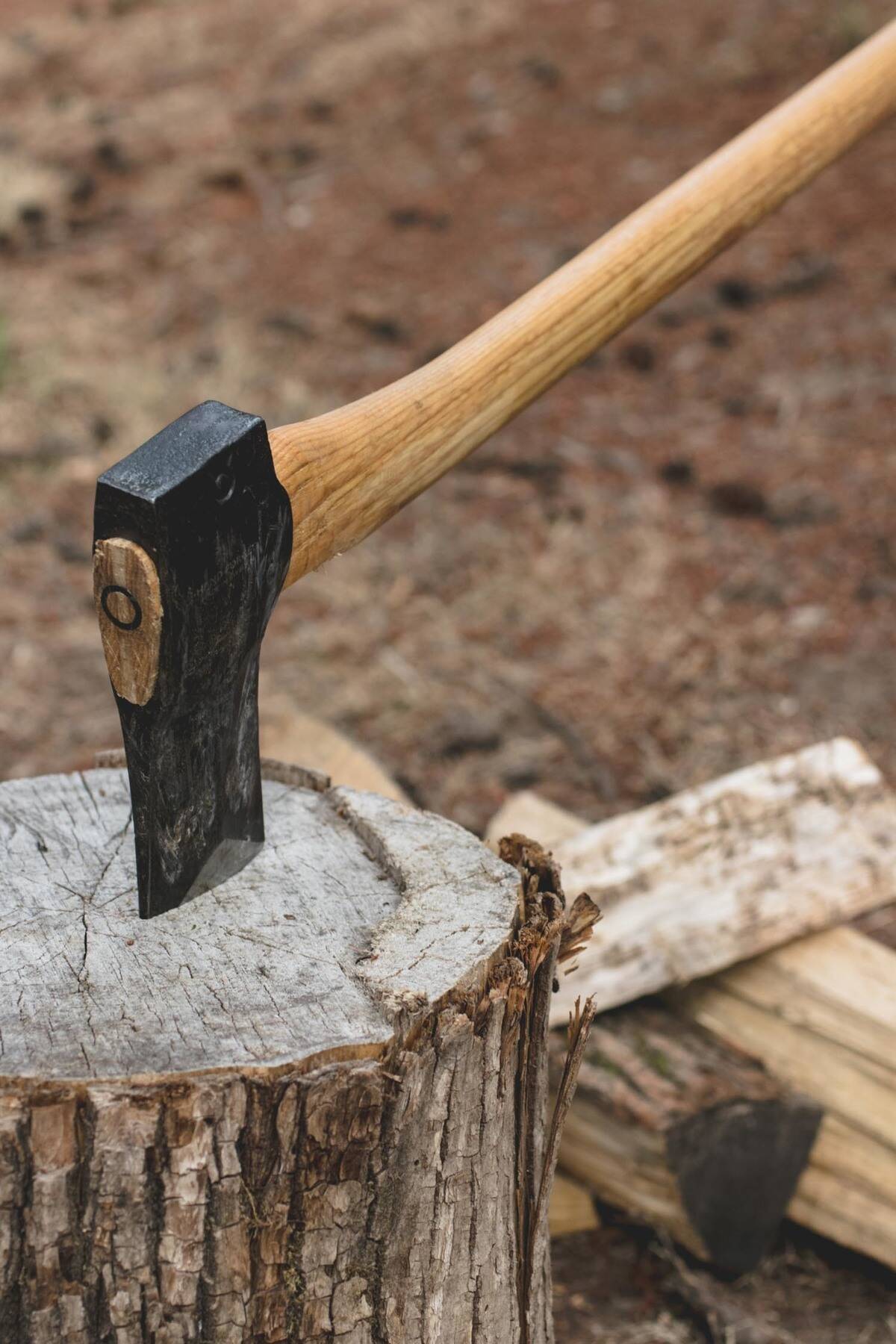
The other good news is: axes designed for splitting wood actually benefit from being not-as-sharp, as they'll get stuck in the wood and be hard to remove. Your goal here is to simply maintain a nice cutting edge so you can split the wood with the least amount of work.